
Scottsdale Big-Rig Accident Lawyer
Big-Rig Accident Lawyer Scottsdale AZ
 Are you in need of a big rig accident lawyer in Scottsdale AZ? If you are, try Don Yearin of Yearin Law Office. He has more than 25 years of litigation experience. To date, he’s earned his clients more than 50 million in case results. If you’d like to speak with him, contact him here.
How Much Is My Big Rig Accident Worth?
Your personal injury case may be worth thousands or millions. Generally, you can seek recovery for medical expenses, cost of ambulance transportation, lost wages, lost earning capacity, need for a caretaker, physical therapy costs, emotional therapy costs, pain and suffering, loss of enjoyment, loss of consortium between you and your spouse, and more.
Who Can I Sue For My Accident?
Multiple parties can be sued in one civil suit. Whom you can sue depends on the circumstances of your case regarding. For example, suppose that the irresponsible big rig driver is an independent contractor. In this case, it’s unlikely you can sue the trucking company employer through vicarious liability. Vicarious liability is a theory that allows you to hold the employer liable for the employee’s actions. Normally, you can sue for a larger compensatory damages amount if you go after the employer. But this theory doesn’t apply to independent contractors.
Yet, if the negligent big rig driver is an employee, you can sue the driver and trucking company. Typically, you’ll sue the trucking company for negligent hiring. Any agency has a duty to make employees undergo a background check and assessment. Let’s say that a big rig driver has been convicted of drunk driving previously. In this case, it’s negligent to hire that driver, especially if the offense was recent.
Exceptions apply to the law of vicarious liability. Suppose the work day had ended for the at-fault truck driver, but the truck driver continued to use the vehicle for activities unrelated to work. During this time, that driver injured you. In this case, it’s unlikely you can go after the employer because the driver was in transit for non-work reasons and without employer permission. However, you can apply vicarious liability if a big rig driver hit you after business hours when the employer requested that the driver make one final delivery. In other words, so long as the driver injured you during work hours or while carrying out a work-related task, you can go after the employer.
Of course, exceptions apply. Therefore, you should speak with a qualified big rig accident lawyer in Scottsdale AZ to ensure that your rights are protected. A less experienced lawyer won’t make as diligent arguments. A less seasoned personal injury lawyer won’t have a clear grasp of the law.
Contact Our Office Today
Don’t let this big rig truck driver go unpunished. After all, your collision may be worth millions. Even if the judge awards you a lower amount, it is the defendant’s duty to cover the costs of your medical expenses and emotional damages. Only a personal injury lawyer as knowledgeable as Don Yearin can be trusted to win your case and see to it that the defendant makes you whole again. Call us today to take advantage of your free consultation. We’ll provide you with the best big rig truck accident lawyer Scottsdale AZ has in town.
When Is The Truck Company Liable?
Liability is oftentimes more complicated than it appears, but your Scottsdale, AZ big-rig accident lawyer can help you through the process. At Yearin Law Office, we have spent over 25 years helping our clients with car accidents, commercial truck accidents, and a wide variety of other personal injury cases. Now, we’re ready to use our experience to help you. Read on to learn more about liability in truck accident cases, and contact our team to get started today.
When The Driver Is An Employee
A trucking company can be held liable for an accident caused by its driver if the driver is classified as an employee and was acting within the scope of their job at the time of the accident. For instance, if the driver was making a delivery or transporting goods as part of their assigned duties, the company may bear responsibility for the resulting damages.
Independent Contractors And Liability
In some cases, truck drivers operate as independent contractors rather than employees. Trucking companies often try to avoid liability by labeling drivers as independent contractors, but this designation does not automatically exempt them from responsibility. Courts will often look beyond the label to examine the level of control the company has over the driver’s work. If the company sets the driver’s schedule, dictates routes, or requires specific safety practices, it may still be held liable, even if the driver is not formally classified as an employee.
Negligence In Hiring And Training
Trucking companies are expected to hire qualified drivers and provide adequate training. If a company hires a driver with a history of unsafe driving or fails to properly train its drivers, it could be held accountable if those oversights contribute to an accident. This can include failing to conduct thorough background checks, overlooking past violations, or not ensuring that drivers meet medical fitness requirements.
Vehicle Maintenance And Inspection Failures
Trucking companies are also responsible for maintaining their vehicles to meet safety standards. Regular inspections, timely repairs, and proper documentation of maintenance are key to preventing accidents caused by mechanical failures. If a company neglects these responsibilities and a poorly maintained truck is involved in an accident, the company may be held liable for the damages.
Pressuring Drivers To Meet Unrealistic Deadlines
Sometimes, trucking companies place undue pressure on drivers to meet tight delivery schedules, leading drivers to speed, skip rest breaks, or drive longer hours than allowed by federal regulations. When this happens, and an accident occurs as a result, the company may be held accountable for its part in encouraging unsafe practices.
Federal regulations on hours of service exist to reduce the risk of fatigue-related accidents, and companies that ignore these rules or create environments that promote violations can face legal consequences. Your Scottsdale big-rig accident lawyer can help you if you suspect your accident was caused by unsafe practices.
Seeking Accountability After A Truck Accident
Truck accidents often involve significant damages and complex liability issues. Identifying whether the trucking company is responsible requires a thorough investigation of the driver’s actions, the company’s policies, and the condition of the vehicle.
At Yearin Law Office, we help clients navigate this process and pursue the compensation they deserve. If you’ve been involved in a truck accident and believe the company may be at fault, contact us today, and see how a Scottsdale big-rig accident lawyer from our office can help.
Big-Rig Accident Lawyer Scottsdale, AZ
If a tractor-trailer rear-ended you on Loop 101, clipped your vehicle while merging onto the 202, or jackknifed ahead of you on I-17, you are likely facing injuries no passenger car was built to absorb.
We have represented injured Arizonans for more than 30 years at Yearin Law Office. Don Yearin, a lifelong Arizonan and trial attorney admitted in 1991, has tried and resolved serious commercial vehicle cases against national carriers and their insurers. Our Scottsdale, AZ big-rig accident lawyer represents the injured only. We never represent trucking companies or insurance carriers. Contact us for a free consultation before giving the other side’s adjuster anything they can use to reduce your claim.
Why Choose Yearin Law Office for Big-Rig Accident Cases in Scottsdale, AZ?
Commercial truck cases do not resemble ordinary auto claims. Federal regulations govern driver hours, drug testing, inspections, and cargo securement. Evidence often disappears within days once a carrier’s rapid response team arrives on scene.
Over 30 Years of Arizona Trial Experience
Our founder, Don Yearin, is an Arizona native. He graduated from the Arizona State University Business School in 1986 with a B.S. in Real Estate and Business, and received his J.D. from the University of Arizona College of Law in 1990. He has been admitted to the State Bar of Arizona and the U.S. District Court for the District of Arizona since 1991. Serious commercial vehicle cases often require a trial lawyer with experience, and you’ll get that from Don. Our personal injury lawyer in Scottsdale, AZ has a 30-plus-year track record of taking cases to verdict when insurers refuse to pay fair value.
Meaningful Results in Commercial Vehicle Cases
Big-rig crashes produce catastrophic injuries, and the recoveries must reflect that. Our firm has recovered millions of dollars for injured clients across Arizona, including verdicts and settlements against trucking carriers, their insurers, and manufacturers of defective vehicle components. Don Yearin has been recognized by The National Trial Lawyers as one of their Top 100 Civil Plaintiff Attorneys and carries the AV Preeminent Rating from Martindale-Hubbell, alongside other professional recognitions earned over his career.
Federal Regulatory Knowledge Applied to Every Case
Commercial trucks operate under federal safety rules from the Federal Motor Carrier Safety Administration (FMCSA), covering hours of service, drug and alcohol testing, vehicle maintenance, and cargo load securement. These rules matter. A driver who logged 14 hours behind the wheel violated hours-of-service limits, and that violation can establish negligence in your case. We know how to preserve electronic logging device data, dashcam footage, post-crash drug screens, and carrier inspection records before they are lost or overwritten by the carrier’s own retention cycles.
Representation of Injured Victims Only
We never represent trucking companies, insurance carriers, or corporate defendants. That single-sided practice is meaningful. Many defense firms rotate between plaintiff and defendant work, which can create conflicts of loyalty. Our firm represents only those who have been hurt. Don Yearin maintains active membership in the Arizona Trial Lawyers Association, the Maricopa County Bar Association, the Scottsdale Bar Association, and the Arizona-Mexico Commission.
⭐⭐⭐⭐⭐
“From the very beginning Don Yearin explained what we would be expecting. I appreciate the no candy coating, but yet the whole picture on what we would be looking at and how he would proceed through this whole process. Mr Yearin, kept us informed of all the going on and times when nothing was going on we still heard from him. He worked for us, I felt he cared and understood all we had gone through and what the future can hold with out the means to care for good recovery. The settlement was more than I thought possible and thanks to Yearin Law group I still have a life. Thank you Don Yearin.”
Reed Schumacher
Read more reviews on our Google Business Profile.
Types of Big-Rig Accident Cases We Handle in Scottsdale
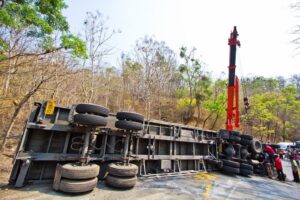 Commercial truck crashes come in many forms, and the underlying cause shapes how we build the claim. We have handled the range of scenarios drivers encounter on Arizona freeways, state routes, and city arterials. The categories below show up most often in our big-rig caseload.
- Rear-end collisions. Following distance is often the first violation. A fully loaded tractor-trailer needs considerably more stopping distance than a passenger car, and driver fatigue compounds the risk at freeway speed.
- Jackknife accidents. A trailer that swings out of line with the tractor blocks multiple lanes and often pulls other vehicles into the wreck. Weather, excessive speed, and braking failures frequently contribute.
- Underride accidents. When a passenger car slides beneath the back or side of a trailer, the outcome is often fatal. Missing or noncompliant underride guards become key evidence.
- T-bone accidents. Trucks that run red lights or misjudge the gap at intersections strike passenger cars broadside. Occupants on the struck side absorb the brunt of the impact.
- Head-on collisions. These are rare but almost always catastrophic when a big-rig is involved. Fatigue, medication, or a driver who has crossed the centerline are commonly factors.
- Side-impact collisions. A merging truck or one making a wide turn can strike adjacent traffic on the passenger side, where crumple zones are narrowest.
- Multi-vehicle accidents. Once a big-rig is caught in a chain-reaction crash, secondary impacts from following vehicles multiply the damage. Sorting out fault requires careful sequencing of events.
- Intersection accidents. Urban intersections along Scottsdale Road, Pima Road, and Shea Boulevard produce more truck-involved claims than many drivers realize.
- Distracted driving accidents. Cell phone use while driving a commercial truck violates federal rules. We subpoena carrier phone records and data from fleet management software.
- Left-turn collisions. Wide-turning trucks often cut off oncoming traffic or clip vehicles in adjacent lanes near driveways and side streets.
- Speeding-related accidents. Tight delivery schedules push some drivers above posted limits. ELD data reveals the truth after the fact.
- Wrongful death. When a big-rig crash claims a life, surviving family members may pursue damages for the loss under Arizona’s wrongful death statute.
- DWI accidents. Federal rules prohibit commercial drivers from operating with a blood alcohol level of 0.04 or higher, half the threshold for ordinary drivers.
Arizona Legal Requirements for Big-Rig Accidents
Several Arizona and federal laws shape every truck accident claim we handle. Understanding these rules helps victims know what to expect and better understand their rights.
Statute of limitations. Under A.R.S. § 12-542, an injured person generally has two years from the date of the crash to file a personal injury lawsuit in Arizona. Wrongful death claims carry the same two-year window, measured from the date of death. Miss the deadline and your right to recover is typically lost. We begin preserving evidence and identifying responsible parties the moment you hire us.
Pure comparative fault. Arizona follows a pure comparative negligence rule under A.R.S. § 12-2505. Even if you are found partially at fault for the crash, your recovery is reduced by that percentage rather than eliminated. A jury that assigns you 30 percent of the fault on a $500,000 case still awards you $350,000. That rule matters because trucking defense lawyers work hard to shift fault onto injured drivers.
Federal motor carrier rules. Interstate trucking carriers and drivers must follow federal safety regulations published by the FMCSA, including hours-of-service limits, drug and alcohol testing, medical certification, maintenance standards, and cargo securement. A violation of any of these rules can support a finding of negligence or negligence per se under Arizona law.
State licensing and oversight. Arizona DOT oversees commercial driver licensing and motor carrier compliance within the state. Commercial drivers face stricter BAC limits, stricter medical certification requirements, and stricter disqualification rules than typical motorists.
What Damages Are Recoverable in Scottsdale Big-Rig Accident Cases?
Big-rig crashes produce injuries that cost more to treat, cause longer absences from work, and often affect earning capacity for life. Arizona law permits recovery for economic and non-economic losses, and in certain cases punitive damages as well.
Economic damages. These are the measurable out-of-pocket losses. Medical bills to date. Future medical care, including surgeries, physical therapy, home health aides, and assistive devices. Lost wages during recovery. Lost earning capacity if you cannot return to the work you did before. Property damage. Out-of-pocket expenses such as travel to appointments or home modifications for permanent disability. Victims with traumatic brain injuries often require lifelong care, and projecting those costs with credentialed life care planners is part of building the claim.
Non-economic damages. These address the human cost that receipts cannot capture. Pain and suffering. Emotional distress. Disfigurement and scarring. Loss of enjoyment of life. Loss of consortium for a spouse. For catastrophic injuries such as spinal cord damage or severe brain trauma, non-economic damages often exceed economic damages at trial.
Punitive damages. Arizona permits punitive damages when a defendant’s conduct reflects malicious actions or conscious disregard for others’ safety. In trucking cases, courts have awarded punitive damages for driving under the influence, falsification of logbooks, negligent hiring of drivers with disqualifying records, and systemic failure to maintain equipment. They are not common, but they are appropriate when the conduct warrants them.
Wrongful death damages. When a big-rig crash causes a fatality, surviving spouses, children, and parents may recover damages for loss of companionship, loss of financial support, funeral and burial costs, and the pre-death pain and suffering of the deceased.
What Steps Should I Take After a Big-Rig Accident?
What you do in the hours and days following a commercial truck crash shapes the outcome of your claim.
- Call 911. Get police and paramedics on scene immediately. A crash involving a commercial vehicle almost always requires a formal investigation report.
- Accept medical evaluation. Even if you feel “okay,” ride in the ambulance if paramedics recommend it. Adrenaline masks injury. Brain injuries, internal bleeding, and spinal injuries often present hours or days later.
- Document the scene. Photograph the trucks, your vehicle, the debris field, skid marks, road conditions, weather, and any visible injuries. Capture the trailer and tractor numbers, the USDOT number painted on the cab, and any carrier logos or signage.
- Get the driver’s information. Record the driver’s name, CDL number, employer, insurance carrier, and the company dispatching the load. The cab driver and the motor carrier are often different entities, and both can be liable.
- Collect witness information. Names and phone numbers of independent witnesses become critical within days. Memories fade. People move. A single neutral witness can change the outcome of a liability dispute.6. Do not speak to the trucking company’s insurer. A recorded statement in the first week almost always hurts your claim. You are not required to give one.
- Preserve your vehicle. Do not allow your car to be repaired or salvaged before it has been inspected by an accident reconstruction specialist. The damage pattern is physical evidence.
- Follow through on medical treatment. Missed appointments and gaps in care give insurers ammunition to argue you were not really injured. Go to every follow-up.
- Keep a record of expenses and missed work. Save every receipt, every medical bill, every mileage log for travel to appointments, and documentation of lost income from your employer.
- Contact a truck accident attorney promptly. Carriers often deploy investigators within hours. Evidence such as ELD data, dashcam footage, and paper logs can be overwritten or destroyed on a 30-day retention cycle unless preserved by a spoliation letter.
Big-Rig Accident Statistics in Scottsdale
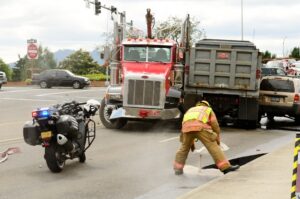 National and state data paint a sobering picture of commercial truck crashes. The NHTSA reports that large trucks account for a disproportionate share of serious injury and fatal crashes nationwide, despite accounting for only a small share of total registered vehicles. The size and weight mismatch explains much of the severity.
According to the Insurance Institute for Highway Safety, a loaded tractor-trailer can weigh 80,000 pounds or more, twenty to thirty times the weight of an average passenger car. When those vehicles collide, the smaller vehicle and its occupants absorb nearly all of the kinetic energy. Fatalities in crashes involving large trucks overwhelmingly occur in the other vehicle.
The FMCSA crash statistics database tracks commercial motor vehicle crashes nationally and by state. Arizona sees thousands of commercial truck crashes each year on its interstate corridors, many concentrated on I-10, I-17, I-40, and the Loop 101 system that borders Scottsdale.
The Arizona Department of Transportation’s crash data section publishes annual Arizona Crash Facts reports. Commercial trucks contribute to a significant share of fatal crashes on Maricopa County freeways, with urban interchanges producing higher truck crash rates than rural segments of the same corridor.
NIOSH truck driver safety research highlights driver fatigue as a leading contributing factor in serious commercial vehicle crashes. Hours-of-service violations, untreated sleep apnea, and shipper scheduling pressure each play documented roles. Fatigue is harder to prove than a speeding citation, but ELD records, trip documents, and post-crash physiological evidence support the claim.
Crashes involving big rigs rarely resolve quickly. Catastrophic injuries such as spinal cord damage, severe brain injury, amputations, and multi-system trauma require extensive medical workups before a fair value can even be calculated. Insurers know this and sometimes use time pressure to their advantage, offering a small settlement early to close the file before the full extent of injury is known.
Scottsdale Big-Rig Accident Lawyer FAQs
What is a “big-rig”?
The term refers to a tractor-trailer or semi-truck, a commercial vehicle consisting of a power unit pulling one or more trailers. It covers 18-wheelers, tankers, flatbeds, and car haulers subject to federal motor carrier rules.
How long do I have to file a claim after a truck accident in Arizona?
Two years from the date of the crash for most personal injury claims, under A.R.S. § 12-542. Wrongful death claims follow the same two-year window, measured from the date of death. Claims against government entities carry much shorter notice deadlines, sometimes as little as 180 days.
Who can be held liable after a big-rig crash?
Liability often spreads across multiple parties. The driver, the motor carrier, the tractor owner, the trailer owner, the shipper, the loading company, a maintenance contractor, and manufacturers of defective components can each bear responsibility depending on the facts.
What if I was partially at fault for the crash?
Arizona’s pure comparative fault rule allows recovery reduced by your percentage of responsibility. Even if you are found 50 percent or more at fault, you can still recover something, unlike in modified comparative fault states, where a plaintiff above a threshold recovers nothing.
How much is my big-rig accident case worth?
It depends on injury severity, medical costs, projected future care, lost earnings, permanent disability, and the strength of liability evidence. No lawyer should quote a figure without reviewing the file in detail and consulting with qualified medical and economic professionals.
Do I need to go to trial?
Most cases settle. But if a carrier’s insurer refuses to offer a fair amount, we are prepared to take the case to a jury. Willingness to try a case often affects the settlement offer we see.
What if the truck driver was speeding?
Speed is documented by the truck’s electronic control module, GPS records, and ELD data. We preserve this evidence early through a spoliation letter and, when necessary, a court order directing the carrier to preserve all electronic data
What is “hours of service” and why does it matter?
Federal rules limit how many hours a commercial driver can operate in a day and a week. Fatigue-related crashes often trace back to hours-of-service violations. The logs either support or contradict the driver’s statement about on-duty time.
What is an ELD?
An electronic logging device automatically records driving time and vehicle movement. Most commercial trucks have been required to use ELDs since 2017. ELD data is often the single most important piece of evidence in a modern truck crash case.
What if improperly secured cargo caused the crash?
Federal cargo securement rules apply to interstate carriers. A shifted load, an unsecured piece of equipment, or an overweight trailer can implicate the shipper and the loading company along with the driver and carrier.
Can I sue the trucking company’s insurance company directly?
In Arizona, injury claims typically proceed against the at-fault parties, not the insurer. A bad-faith claim against the insurer is a separate action that may arise if the carrier refuses to pay a covered claim in good faith.
What if a family member was killed in a big-rig crash?
A wrongful death action may be brought by the surviving spouse, children, parents, or the personal representative of the estate. Recoverable damages include loss of companionship, loss of financial support, funeral expenses, and pre-death pain and suffering.
How much does a big-rig accident attorney cost?
We handle truck accident cases on contingency. You pay no attorney fee unless we recover for you. Consultations are free, and we cover case costs up front.
What evidence matters most in a commercial truck case?
The ELD data, dashcam footage, driver qualification file, medical certifications, drug and alcohol test results, maintenance logs, and the post-crash investigation performed by the carrier. Preserving these records before they are lost is often the single most important step.
When should I contact a lawyer after a truck crash?
As soon as possible. Carriers deploy rapid response teams within hours of a major crash. The earlier we are involved, the more evidence we can secure before the carrier’s 30-day retention cycle starts overwriting it.
Most Dangerous Locations for Big-Rig Accidents in Scottsdale
 Big-rig crashes in the Scottsdale area cluster around a handful of corridors. Knowing where they happen most often helps drivers anticipate risk and helps us build claims for those who have already been hurt.
- Loop 101 (Pima Freeway). Heavy commercial traffic moves along the eastern and northern stretches, particularly near the Pima Road, Scottsdale Road, Shea Boulevard, Indian Bend, and Via de Ventura interchanges.
- State Route 51 (Piestewa Freeway) southern approaches. Southbound traffic from north Scottsdale merges into dense commuter volume, and trucks moving goods between industrial corridors use this route during off-peak windows.
- Interstate 17 through north Phoenix. Big-rigs climbing toward Anthem and Flagstaff or descending into the Valley represent a significant share of commercial traffic affecting Scottsdale motorists.
- Scottsdale Road (north and south). Commercial deliveries along Scottsdale Road, particularly near Old Town and the Airpark commercial district, produce frequent truck-involved intersection crashes.
- Pima Road. Industrial and construction traffic serving the Scottsdale Airpark and the 101 interchange areas contribute to rear-end and intersection crashes involving big-rigs.
- Shea Boulevard. East-west movement between the Loop 101 and the foothills area sees regular truck activity and periodic severe crashes near signalized intersections.
- Bell Road and the north corridor. Construction and delivery traffic along Bell Road and the corridors feeding into north Scottsdale round out the most frequently cited truck crash zones.
What Are Important Local Resources for Scottsdale Big-Rig Accident Victims?
After a serious crash, most victims need information from multiple agencies and providers. The following Scottsdale and Phoenix-area resources are commonly useful, though inclusion here is not an endorsement by our firm and none of the organizations below are affiliated with Yearin Law Office.
- HonorHealth Scottsdale Osborn Medical Center is a Level I trauma center serving the Scottsdale area, appropriate for severe crash injuries requiring specialty trauma care.
- Mayo Clinic Hospital in Phoenix provides specialty care for complex trauma, including neurological and orthopedic injuries common in big-rig crashes.
- The Scottsdale Police Department investigates crashes within city limits and issues traffic collision reports that claimants and insurers rely on.
- The Arizona Department of Public Safety investigates commercial vehicle crashes on interstate and state highways, including Loop 101, SR 51, and I-17.
- The Arizona Department of Transportation oversees commercial vehicle licensing, motor carrier compliance, and publishes annual crash statistics.
- The FMCSA SAFER system lets you look up motor carrier safety records, inspection history, and prior crashes by USDOT number.
- The Arizona Department of Insurance handles complaints about insurance carriers acting in bad faith toward claimants.
Contact Yearin Law Office
If you have been injured in a big-rig accident, we are here to help. Consultations are free, and you pay no attorney fees unless we recover compensation. Contact us through our website or call our office to arrange a free case review with our Scottsdale big-rig accident lawyer. We return calls and emails promptly and will tell you honestly whether we believe we can help.